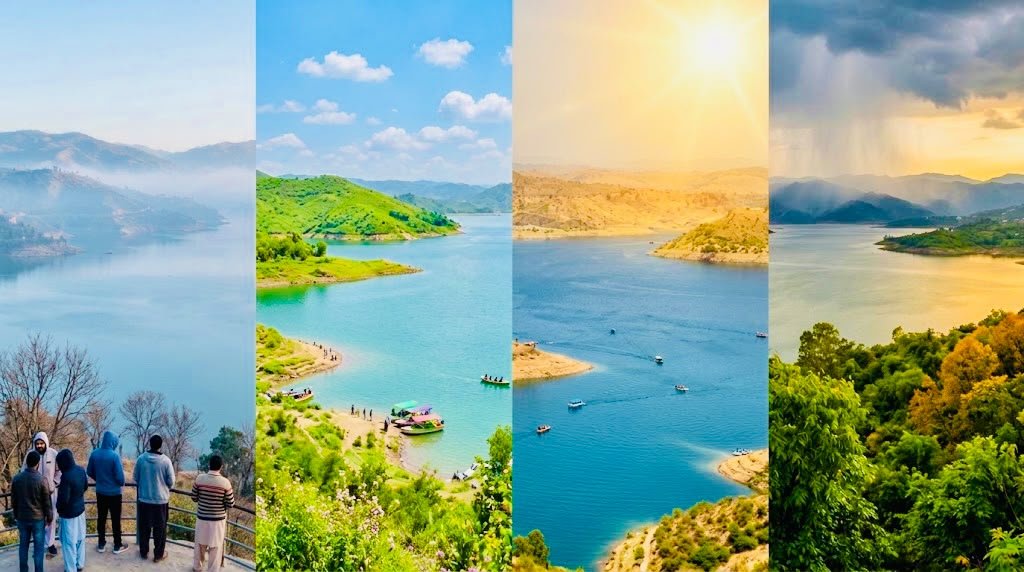
Mirpur Azad Kashmir has five distinct seasons with big swings between them crisp winters of 6–20°C, hot summers reaching 38°C+, and a wet monsoon in July–August. For most UK Pakistani families, the best time to visit is November to February cool, dry, and ideal for weddings and family gatherings.
Mirpur, often affectionately known as “Little England” because of its large British-Pakistani diaspora, is a city of stunning contrasts. Situated around the massive Mangla Dam, its geography creates a unique microclimate that differs significantly from the mountainous northern regions of Azad Kashmir.
Whether you are an overseas Pakistani planning your annual trip back home for wedding season, or a tourist looking to enjoy boating on the lake, timing your visit to match the weather is crucial. This full-year guide covers every season, temperatures in both Celsius and Fahrenheit, what to pack, and when exactly to come.
Key weather facts at a glance
- Climate type: Humid subtropical with 5 distinct seasons
- Hottest month: June (highs of 38°C / 101°F+)
- Coldest month: January (lows of 6°C / 43°F)
- Wettest month: July (over 15 rainy days, ~6.8 inches of rain)
- Driest month: November (just 0.4 inches of rain)
- Best overall month: November pleasant temperatures, dry, clear skies
- Peak diaspora season: November to February (weddings, family gatherings)
- Avoid: Peak June heat & heavy July monsoon rains if possible
Why Mirpur’s Climate Is Different
Mirpur sits in the lower reaches of Azad Kashmir, close to the Punjab plains, which gives it a much warmer and more extreme climate than the mountainous north of AJK. While Neelum Valley and Rawalakot stay cool year-round, Mirpur experiences the full force of Pakistani plains weather hot summers, strong monsoons, and crisp (but not freezing) winters.
The large Mangla Dam reservoir moderates the climate slightly, adding humidity in summer but also helping keep nighttime temperatures bearable. Furthermore, the surrounding hills create pockets of cooler air at higher elevations around Dadyal and Kotli. If you’re planning to split your trip between Mirpur city and the villages further up, pack for both.
Below is a complete, year-round breakdown of Mirpur’s climate season by season.
❄️Winter
December – FebruaryWinter is the peak season for overseas Pakistanis to return home. The days are pleasantly sunny and cool, making it the perfect weather for shopping in the bazaars, attending grand outdoor weddings, and visiting family without breaking a sweat. January is the coldest month of the year, so packing a warm jacket and sweaters for the chilly evenings is essential.
🌸Spring
March – AprilSpring in Mirpur is short but beautiful. The surrounding hills turn a vibrant green, and temperatures stay comfortable before the intense summer heat sets in. If you want to enjoy outdoor sightseeing at Ramkot Fort or take a boat ride on Mangla Dam, this is a prime window warm enough to be outdoors all day, cool enough to walk the fort walls without exhaustion.
☀️Summer
May – JuneBy May, the heat rises sharply. June is officially the hottest month of the year, with average daily highs exceeding 101°F (38°C), and occasionally spiking even higher. If you are visiting from the UK during these months, the heat can feel oppressive. Daytime activities are usually limited to early mornings or late evenings. Sunscreen, hydration, and air-conditioned accommodation are non-negotiable.
🌧️Monsoon
July – AugustJuly brings the heavy monsoon rains, making it the wettest month of the year with over 15 rainy days on average. While the rain drops peak temperatures slightly, the humidity spikes significantly, creating very muggy conditions. The upside? The rainfall transforms the landscape around the dam into vibrant, lush green scenery some of the most photogenic Mirpur gets all year.
🍂Autumn
September – NovemberSeptember is a transitional month still warm, but with the clearest skies of the year. By October and November, the weather becomes incredibly pleasant. November is actually the driest month of the year (averaging just 0.4 inches of rain), making it an excellent time for uninterrupted sightseeing, Mangla boat trips, and extended family visits.
When Is the Best Time to Visit?
The right time to visit Mirpur depends entirely on why you’re coming. Here’s a quick guide matched to the three most common traveller profiles.
| Traveller profile | Best months | Why |
|---|---|---|
| Overseas Pakistanis (family & weddings) | November – February | The climate is cool, humidity is gone, and you avoid the intense summer heat. Perfect for heavy traditional clothing, grand outdoor weddings, and large family gatherings. |
| Sightseers & tourists | March – April, or October | Warm enough for outdoor activities at Ramkot Fort, Mangla Dam and Khari Sharif but avoiding the heavy monsoon rains of July and the extreme heat of June. |
| Water sports enthusiasts | May & September | The best “lake score” weather for enjoying boating, jet-skiing and swimming around Mangla Dam just before and just after the monsoon season. |
If you are planning your itinerary, remember that while Mirpur serves as a gateway to the rest of Azad Kashmir, its weather is much warmer than destinations further north like Neelum Valley or Rawalakot. Pack accordingly you might need both t-shirts for Mirpur and a jacket for the day trip up to Dadyal or beyond.
Month-by-Month Temperature Overview
For precise planning, here’s the full year at a glance.
| Month | Avg High | Avg Low | Rainfall | Verdict |
|---|---|---|---|---|
| January | 18°C / 65°F | 6°C / 43°F | Low | Coldest month pack a jacket |
| February | 20°C / 68°F | 8°C / 46°F | Low | Crisp, perfect for weddings |
| March | 25°C / 77°F | 13°C / 56°F | Low–Medium | Prime sightseeing weather |
| April | 31°C / 88°F | 18°C / 65°F | Low | Warm, vibrant, green hills |
| May | 36°C / 98°F | 23°C / 73°F | Low | Hot great for Mangla boating |
| June | 38°C / 101°F | 25°C / 78°F | Low–Medium | Hottest avoid midday activity |
| July | 35°C / 95°F | 25°C / 77°F | Very High (6.8 in) | Monsoon peak wet & muggy |
| August | 34°C / 93°F | 24°C / 75°F | Very High (6.2 in) | Still monsoon lush landscapes |
| September | 33°C / 92°F | 22°C / 72°F | Medium | Clearing skies, excellent light |
| October | 29°C / 85°F | 15°C / 59°F | Low | Pleasant, ideal for touring |
| November | 25°C / 77°F | 10°C / 51°F | Lowest (0.4 in) | Driest month best overall |
| December | 19°C / 67°F | 7°C / 45°F | Low | Cool & dry, wedding season begins |
Figures are long-term averages. Day-to-day weather can vary check a reliable forecast app close to your travel date.
What to Pack for Each Season
Winter (December–February)
Winter packing essentials
- Warm jacket or coat chilly in the evenings, especially in January
- Thin thermal layers for layering under traditional clothing
- Closed shoes & socks flip-flops won’t cut it after sunset
- Scarf or shawl essential for women; dual-use for warmth and modesty
- Moisturiser & lip balm dry winter air
Spring (March–April) & Autumn (October–November)
Spring/autumn packing essentials
- Light long-sleeve shirts comfortable for day and evening
- A light cardigan or jumper for cooler evenings
- Walking shoes for Ramkot and Rohtas fort visits
- Sunglasses & sunhat bright autumn and spring sun
- Reusable water bottle stay hydrated during sightseeing
Summer (May–June) & Monsoon (July–August)
Summer & monsoon packing essentials
- Loose cotton clothing breathable fabrics only
- SPF 50+ sunscreen the sun is intense
- Wide-brim sunhat essential for midday heat
- Light raincoat or umbrella critical during July–August monsoon
- Mosquito repellent monsoon season brings mosquitoes
- Electrolyte sachets Dioralyte or local equivalents for heat exhaustion
- Open sandals but not slip-on if walking on wet surfaces
Frequently Asked Questions
The weather questions UK Mirpuri families ask us most often before their trip.
Timing & seasons
What is the best month to visit Mirpur Azad Kashmir?
November is the best overall month it’s the driest month of the year (just 0.4 inches of rain), temperatures are comfortably cool (10–25°C), and the skies are clear. For UK Pakistanis attending weddings, the entire window from November to February is ideal.
What is the weather like in Mirpur in summer?
Summer in Mirpur (May–June) is sweltering, dry, and intense, with daily highs of 36–38°C (98–101°F) and sometimes higher. June is the hottest month. If you’re visiting from the UK, the heat can feel oppressive plan activities for early mornings or evenings, and stay in air-conditioned accommodation.
Rain, monsoon & humidity
When is the monsoon season in Mirpur?
The monsoon season in Mirpur runs from July through August. July is the wettest month with over 15 rainy days and 6.2–6.8 inches of rainfall. However, the rain brings relief from the June heat and turns the landscape around Mangla Dam a vibrant green beautiful for photography but less ideal for sightseeing.
Does it ever snow in Mirpur?
No snow is extremely rare in Mirpur city because of its relatively low elevation and proximity to the Punjab plains. Winter temperatures drop to around 6°C (43°F) at night but rarely below freezing. For snow and mountain scenery, head further north to Neelum Valley, Rawalakot, or Murree.
Travel planning
What should I pack for a trip to Mirpur?
Pack according to the season: warm jacket and layers for winter (Dec–Feb), light long-sleeves and walking shoes for spring/autumn (Mar–Apr, Oct–Nov), loose cotton, sunscreen and SPF 50+ for summer (May–Jun), and a raincoat or umbrella for monsoon (Jul–Aug). Also pack modest clothing for visits to Khari Sharif Shrine regardless of season.
Is Mirpur’s weather the same as the rest of Azad Kashmir?
No, Mirpur is significantly warmer than the mountainous regions further north. While Neelum Valley and Rawalakot stay cool year-round due to higher elevation, Mirpur sits close to the Punjab plains and experiences much hotter summers. If you’re combining a Mirpur trip with northern AJK, pack for both t-shirts for Mirpur and a jacket for the mountains.
Can I do water sports at Mangla Dam?
Yes the best months for water activities at Mangla Dam are May and September, when the weather is warm enough for enjoyable boating and jet-skiing but you avoid the heaviest monsoon rains. Avoid July’s peak rains and extreme June heat for the most comfortable experience on the water.
Final Thoughts
Mirpur’s weather is the first thing most UK Pakistani families underestimate on their first trip home either packing too lightly for winter weddings in January, or too heavily for a June visit that turns out to be 38°C in the shade. Hopefully this full-year guide saves you from both.
If you have flexibility on timing, book your Mirpur trip for November. The weather is dry, pleasant, the landscape is still green from the recent monsoon, and the diaspora crowds haven’t fully arrived yet. However, if your visit is dictated by wedding season or school holidays, the packing guide above will help you prepare for whatever Mirpur throws at you.
Above all, remember that Mirpur’s weather is the gateway, not the destination. Once you’re here, the Mangla Lake sunsets, the warmth of local hospitality, and the chai at every roadside dhaba make up for any humidity or heat you might encounter.