When a family member in Mirpur falls seriously ill, the next question is often not which doctor but which city. For major treatment, people still travel to Islamabad, Rawalpindi or Lahore, and the journey eats into savings before the first prescription is even written. KORT Health-Care City is trying to change that. It is a planned 250-bed charity hospital in Mirpur, built around a simple idea quality medical care should not depend on how much money a family has.
Quick Facts at a Glance
- Project: KORT Health-Care City Mirpur
- Behind it: Kashmir Orphan Relief Trust (KORT)
- Location: Mirpur, Azad Jammu & Kashmir
- Planned capacity: 250 beds
- Nature: Charitable healthcare initiative
- Build: Phased construction, ongoing
- Founder: Chaudhry Muhammad Akhtar (Tamgha-e-Imtiaz, 2020)
- Official website: kort.org.uk
What Is KORT Health-Care City?
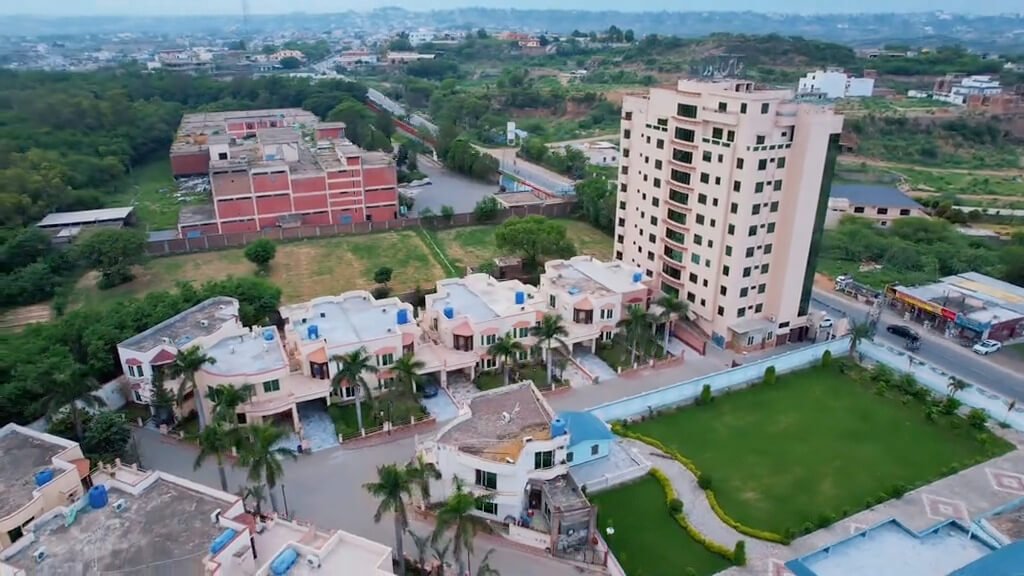
KORT Health-Care City is a charitable healthcare development being built in Mirpur, Azad Jammu & Kashmir. The flagship building is planned as a 250-bed hospital, bringing emergency care, surgical facilities, specialist departments and diagnostic services together in one coordinated place.
It is being developed by the Kashmir Orphan Relief Trust (KORT), a welfare organisation most people in Mirpur already know from its work with orphan children. The hospital is the natural next step in that journey of service, and construction is happening in phases rather than as a one-time event.
The name “Health-Care City” is deliberate. The plan is for a wider campus bringing together inpatient care, outpatient clinics, diagnostics and specialist services so a patient can finish most of their treatment in one trip instead of being sent from one city to the next.
| Detail | Information |
|---|---|
| Project name | KORT Health-Care City |
| Location | Mirpur, Azad Jammu & Kashmir |
| Planned capacity | 250 beds |
| Lead organisation | Kashmir Orphan Relief Trust (KORT) |
| Nature | Charitable, non-profit healthcare initiative |
| Target beneficiaries | Underserved and deserving patients across AJK |
| Development approach | Phased construction |
The Story Behind KORT
To understand this hospital, it helps to understand where KORT came from. The story does not start in a boardroom it starts with an earthquake.
In October 2005, a massive earthquake shook northern Pakistan and Azad Kashmir. Entire villages were flattened and many children lost their parents. In the weeks after, Chaudhry Muhammad Akhtar saw children with no home, no family and no one left to look after them. He decided to do something about it, and that decision became KORT.
What began as emergency help grew into a structured welfare mission. KORT now sponsors orphan children in its care with housing, food, clothing, education and a proper upbringing. It is not treated as charity handouts but as a long-term commitment to raise these children into independent adults.
In 2020, the Government of Pakistan recognised Chaudhry Muhammad Akhtar’s welfare work with the Tamgha-e-Imtiaz, one of the country’s highest civil awards. KORT Health-Care City is the next chapter of that story the mission did not want to stop at orphan care, it wanted to reach the sick and the needy as well.
Why Mirpur Needs This Hospital
Mirpur is one of the most important urban centres in Azad Kashmir. It is the point of return for a huge overseas community and it draws in patients from the surrounding districts when something serious happens.
The healthcare picture here is uneven. Basic treatment is available, but for heart problems, complex surgeries, paediatric emergencies and specialist needs, families often end up on the road to Islamabad or Rawalpindi. That journey is expensive before you even reach a clinic fuel, time off work, accommodation, and the private hospital bill waiting at the end.
The purpose of KORT Health-Care City is not to compete with Mirpur’s existing public or private hospitals. It is meant to complement them. The plan is simple:
- Expand overall healthcare capacity inside AJK
- Reduce the number of patients who have to leave the region for treatment
- Serve a wide catchment area beyond Mirpur city itself
- Give deserving patients a proper, dignified route to treatment they can afford
Planned Services and Departments
The final list of departments, equipment and staffing will depend on approved plans, available funding and regulatory sign-off, so this section describes intended scope rather than a finished service list. With that said, the project documents describe six core areas the hospital is being built around.
Emergency and Acute Care
Round-the-clock emergency response for accidents, strokes, heart attacks and other urgent cases where minutes matter.
Cardiac and Specialist Care
Heart-related and other specialist treatment so patients may not need to travel out of AJK for the care they need.
Paediatric Care
A dedicated department for children, covering everything from everyday illness to more serious childhood conditions.
Surgical and Inpatient Care
Operating theatres, recovery wards and inpatient beds supported by proper nursing and post-operative care.
Diagnostic Services
Laboratory testing, imaging and investigations so the right diagnosis can be reached before treatment begins.
Outpatient Consultations
Everyday clinics for consultations, follow-ups and ongoing care, so most issues can be handled without admission.
These six areas are the backbone of what any serious district-level hospital needs. Put together, they allow a patient to walk in with a problem, get diagnosed, get treated and be discharged without being pushed into another city for a missing service.
What Does “Charity Hospital” Really Mean?
This is the question people ask most. A “charity hospital” sounds good on paper, but what does it mean on the ground?
The core principle KORT has set for this project is simple: access to essential medical care should not depend on a person’s financial situation. Patients will be prioritised based on need, and those who cannot afford treatment will be helped to receive it.
That does not mean everything is free for everyone. The exact rules will follow KORT’s approved policies and the resources available at the time. A charity hospital still has to pay salaries, buy medicine and run equipment, and those costs are covered through donations, zakat, sadaqah and support from local and overseas donors. Practically, it means a family turning up with no money in their pocket will be looked at first, not turned away.
Expected Impact on Mirpur and AJK
Once the hospital is operational, the ripple effects reach further than the wards themselves. Here is what the project is expected to change:
Better Healthcare Access
Patients in Mirpur and surrounding districts get access to a modern, well-equipped facility without a long journey.
Reduced Travel for Treatment
Fewer families need to make the stressful trip to Islamabad, Rawalpindi or Lahore for care that could happen locally.
A Dignified Route for Deserving Patients
People who cannot afford care get a respectful path to treatment instead of borrowing or going without.
Stronger Local Infrastructure
The project adds real capacity to AJK’s healthcare system rather than relying on overloaded facilities elsewhere.
Local Jobs and Training
Doctors, nurses, technicians and support staff will be needed creating long-term employment inside Mirpur.
Long-Term Community Wellbeing
A healthier population means stronger families, better schooling and more productive work.
Why This Matters for Overseas Kashmiris
A very large part of the Mirpur story lives outside Mirpur. Families in the UK especially across Bradford, Birmingham, Manchester and London have deep roots here. Many have parents, siblings or elderly relatives still in Azad Kashmir, and the worry sits quietly in the background until something goes wrong.
When that phone call comes, the first instinct is always the same. Which hospital? Can they be looked after properly here, or does the family need to arrange a transfer? A well-equipped local hospital changes that conversation. An elderly parent can be seen quickly, close to home, surrounded by family, and overseas sons and daughters have something trustworthy to hold onto when they cannot be there in person.
The project also gives the UK Mirpuri community a transparent, well-known charitable cause they can support through KORT’s official channels. Many families already give in zakat and sadaqah every year, and a hospital at home is one of the most lasting places that money can go.
If you are visiting Mirpur from the UK and want to understand the project in person, contact KORT in advance through their official channels. They can tell you whether a site visit is possible and share current construction and service updates.
How You Can Support the Project
A charity hospital of this size does not finish itself. It is built by thousands of small contributions from people who care, and by a smaller number of larger donors who commit to departments, equipment or specific phases of construction.
Three practical options
1. Monthly or one-time donations. Regular giving, even in small amounts, is often more useful than a single large gift, because it helps plan running costs.
2. Zakat and sadaqah. A charitable hospital serving deserving patients is a natural place to direct your zakat if it meets your scholar’s eligibility criteria.
3. Spreading the word. Many overseas Mirpuris still have not heard of this project. Sharing an official page or article inside your family WhatsApp group costs nothing and reaches exactly the right audience.
Before giving, always verify directly through KORT’s own channels. Their official website is kort.org.uk, and that is the safest place to find current donation details, bank information and project updates.
Frequently Asked Questions
What is KORT Health-Care City?
KORT Health-Care City is a charitable healthcare project in Mirpur, Azad Jammu & Kashmir, led by the Kashmir Orphan Relief Trust. Its flagship building is a planned 250-bed hospital, with the aim of bringing modern, affordable healthcare closer to home for people across AJK.
Where exactly is the hospital located?
The project is in Mirpur, Azad Jammu & Kashmir. The site is under phased construction. For the exact address, driving directions or a planned site visit, please check with KORT through their official website.
How many beds will the hospital have?
The flagship hospital is planned as a 250-bed facility. The number of operational beds at any given time will depend on which phases of construction and staffing have been completed.
Who founded KORT?
KORT was founded by Chaudhry Muhammad Akhtar after the devastating 2005 earthquake. What started as support for orphaned children has grown into a large welfare organisation. In 2020, he received the Tamgha-e-Imtiaz for his welfare work.
Will treatment really be free?
The hospital is charitable in nature, with a clear focus on helping deserving patients who cannot afford care. Exact eligibility for free or subsidised treatment will follow KORT’s approved policies and available resources, which are expected to be published as departments open.
Is the hospital open to patients yet?
Construction is happening in phases. Some services may come online before the full 250-bed capacity is reached. For the latest opening and service dates, check KORT’s official announcements rather than social media rumours.
Can overseas Kashmiris donate to the project?
Yes. Many of KORT’s supporters are overseas Pakistanis, especially in the UK. Donations, including zakat and sadaqah where eligible, can be made through KORT’s official channels. Always use the verified routes listed on kort.org.uk.
Final Thoughts
Some people build buildings. Others build hope. KORT Health-Care City is being built in both senses the walls are going up in phases, and the idea behind them is going up at the same pace. If you live in Mirpur, this project is one worth watching and, where you can, supporting. If you live overseas and still think of Mirpur as home, this is a chance to leave something behind that long outlasts a single visit.